
Heat Pump for Underfloor Heating in New Build Ollerton: The 2026 Developer’s Guide
- James

- Jun 2
- 12 min read
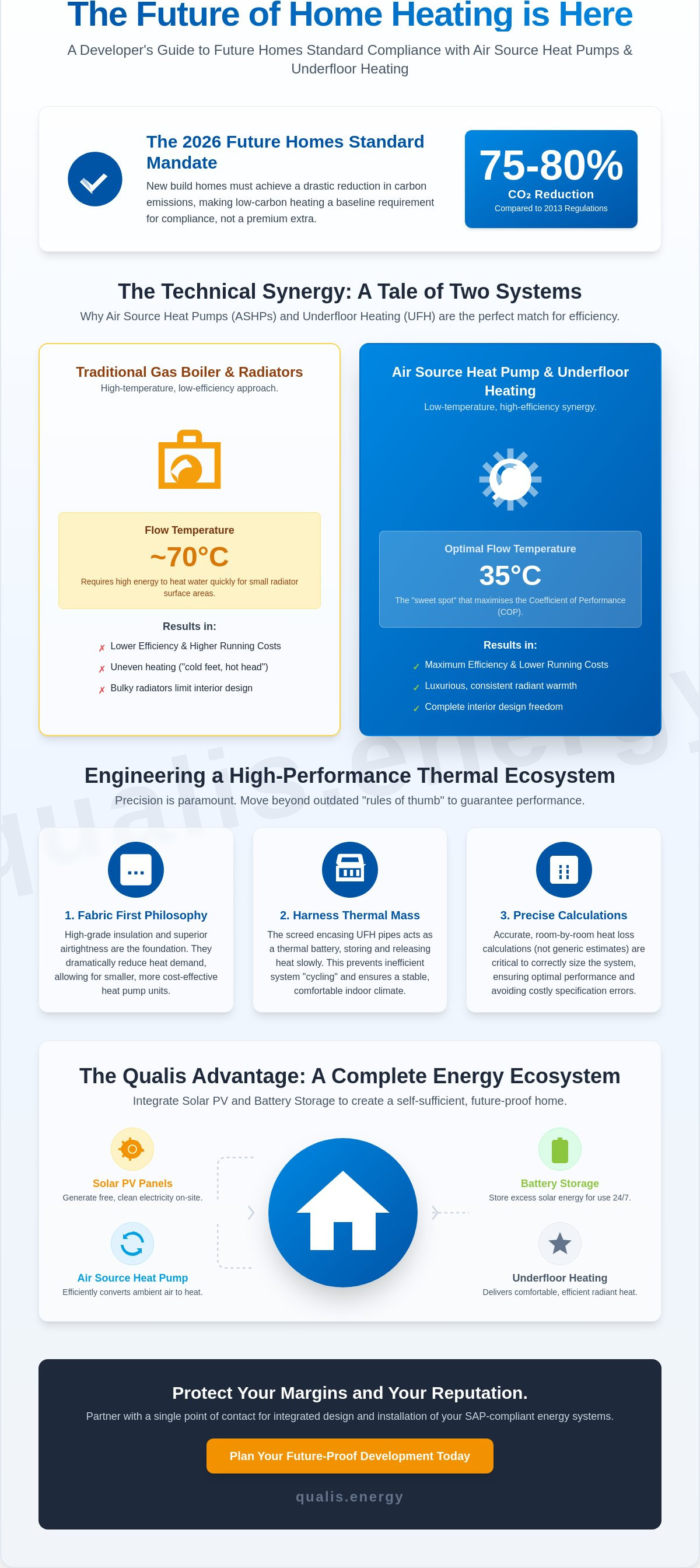
The traditional gas boiler isn't just outdated; for a 2026 developer, it's a compliance liability. The future of domestic energy has arrived, and it's built on the efficiency of low-carbon technology. As the Future Homes Standard now mandates a 75-80% reduction in carbon emissions compared to 2013 levels, installing a heat pump for underfloor heating in new build Ollerton has transitioned from a premium upgrade to a regulatory necessity. You're likely facing the headache of coordinating separate contractors whilst trying to ensure your designs meet the rigorous demands of Part L 2025/2026 compliance during a damp East Midlands winter.
We understand that the pressure to deliver SAP-compliant homes without spiralling costs is immense. This guide will help you master the technical synergy between air source heat pumps and underfloor heating to create a future-proof thermal-mass ecosystem. We'll examine the specific requirements for the Newark and Sherwood District Council area, the benefits of integrating solar PV and battery storage, and how a single point of contact for design and installation can protect your margins and your reputation.
Key Takeaways
Understand why the 2026 regulatory landscape makes low-carbon heating the mandatory baseline for all successful local developments.
Discover how to optimise a heat pump for underfloor heating in new build Ollerton by targeting the 35°C flow temperature "sweet spot" for maximum efficiency.
Learn to specify the correct screed depths and high-grade insulation boards to turn your ground floor into a high-performance thermal radiator.
Avoid common specification errors by moving beyond outdated "rules of thumb" to precise, room-by-room heat loss calculations.
Explore how integrating solar PV and battery storage can transform a standard heating system into a self-sufficient, future-proof energy ecosystem.
Table of Contents
Future-Proofing Your Ollerton New Build with Low-Carbon Heating
The UK is undergoing a fundamental shift in how we heat our homes. For developers in Nottinghamshire, this isn't a distant prospect; it's a current reality. Integrating a heat pump for underfloor heating in new build Ollerton has become the hallmark of a high-quality, forward-thinking development. Rather than relying on combustion, these systems utilise the refrigeration cycle to move thermal energy from the outside air into the home. Understanding the technical principles of how heat pumps work allows designers to appreciate why they are so much more efficient than traditional boilers, especially when paired with the right emitters.
Developers in Ollerton are increasingly abandoning fossil fuels. It's a strategic move. By adopting low-carbon technology now, they avoid the costly retrofitting that will inevitably be required for homes built to older standards. This transition is underpinned by a "fabric first" philosophy. In a 2026 new build, the insulation and airtightness levels are so high that the heat demand is significantly reduced. This allows for smaller, more cost-effective heat pump units that don't need to work nearly as hard. Air source heat pumps achieve their highest coefficient of performance when supplying low-temperature water to a large surface area, making underfloor heating the ideal partner for maximum energy savings.
The Impact of the Future Homes Standard in 2026
The 2026 regulatory landscape is defined by the Future Homes Standard. This mandate requires new Nottinghamshire developments to produce 75-80% less CO2 emissions than those built under 2013 regulations. Achieving a high SAP rating is no longer just about ticking boxes; it's about proving the home's long-term viability. Building control approval now hinges on these low-carbon metrics. By moving away from gas grid reliance, developers are offering buyers true electrical independence, particularly when these systems are integrated with other renewable technologies.
Why Ollerton Homeowners Prefer Underfloor Heating
Modern buyers in the East Midlands have high expectations for both aesthetics and comfort. Eliminating bulky radiators allows for total interior design flexibility, which is essential for the open-plan layouts that dominate modern architecture. Beyond the look, there's the feel. Radiant heat provides a consistent temperature from the floor up, avoiding the "cold feet, hot head" sensation caused by convection currents. For eco-conscious buyers, a home with a high EPC rating and an integrated low-carbon system represents a lower-risk, higher-value investment that is ready for the decades ahead.
The Technical Synergy: Why ASHPs and Underfloor Heating Are a Perfect Match
Efficiency in a modern home is not a product of chance; it is the result of precise engineering. The pairing of a heat pump for underfloor heating in new build Ollerton relies on the fundamental physics of heat transfer. While traditional gas boilers are designed to blast water through narrow pipes at 70°C, an air source heat pump thrives at much lower temperatures. The "sweet spot" for maximum efficiency is typically around 35°C. At this level, the system provides a gentle, consistent warmth that permeates the entire building fabric without forcing the compressor to work at its limit.
Think of the entire floor as a massive, low-temperature radiator. Because the surface area of a floor is so vast compared to a standard wall-mounted unit, it requires significantly less energy to achieve the same room temperature. This reduces the "lift" the heat pump must perform. According to the Carbon Trust's expert resources on low-carbon heating solutions, narrowing the gap between the external air temperature and the internal flow temperature is the most effective way to slash long-term running costs. Operating at a lower flow temperature directly improves the Coefficient of Performance (COP) of market-leading Mitsubishi or Daikin units by ensuring the compressor runs within its most efficient frequency range.
Thermal mass is your silent ally in this setup. In a new build environment, the concrete or liquid screed encasing the heating pipes acts as a battery for thermal energy. It stores heat and releases it slowly over several hours, which prevents "cycling," the inefficient on-off behaviour that can shorten the lifespan of mechanical components. This stability ensures that the indoor climate remains perfectly balanced, regardless of how the Nottinghamshire weather fluctuates outside.
Maximising COP and SCOP in a New Build Environment
New build envelopes are increasingly airtight, meaning the heat pump doesn't have to fight constant drafts or heat loss. However, precision sizing remains critical for developers. Over-speccing a unit often leads to "short cycling," where the system reaches its target temperature too quickly and shuts down, whereas under-speccing leaves homeowners cold during a peak East Midlands winter. Ensuring a bespoke air source heat pump installation that matches the specific heat loss of each room is the only way to guarantee the high Seasonal Coefficient of Performance (SCOP) that buyers now expect.
Weather Compensation and Smart Controls
Ollerton’s local climate requires a system that can think for itself. Smart weather compensation uses external sensors to monitor outdoor conditions in real-time. If a cold snap is detected, the system proactively adjusts the heating curve to maintain internal comfort without a sudden spike in energy demand. When combined with zonal control, developers can offer homeowners the ability to manage different temperatures for bedrooms versus living areas. Integrating these systems with smart thermostats allows for total remote management via smartphone, putting the homeowner in complete control of their energy footprint.
Designing Your System: Screed, Joists, and Zonal Control
The physical installation of a heat pump for underfloor heating in new build Ollerton requires more than just laying pipes; it demands a strategic choice of materials to ensure the building becomes a high-performance thermal store. Design begins from the ground up. High-quality insulation boards, typically PIR or similar high-performance materials, must be installed beneath the heating loops to prevent energy from leaching into the subfloor. Without this thermal barrier, even the most efficient air source unit will struggle to maintain room temperatures during a peak East Midlands winter.
Precision in pipe spacing and loop lengths is the difference between a comfortable home and one riddled with cold spots. If loops are too long, the water cools significantly before reaching the end of the circuit, leading to uneven heat distribution. Conversely, tight spacing in high-heat-loss areas, such as beneath large glazed elevations, ensures consistent warmth. Liquid screed is the preferred choice for ASHP integration because its fluid nature eliminates air pockets, ensuring 100% pipe encapsulation and superior thermal conductivity.
Screed Systems: The Ultimate Heat Sink
For ground floors, developers must choose between traditional sand and cement or modern anhydrite screeds. Anhydrite screeds are often the superior option for Ollerton sites due to their thinner application and faster drying times, which keeps the build schedule on track. Because liquid screed is more conductive, it allows the floor to react more quickly to thermostat changes. The sheer thickness of a screed layer also provides a "passive battery" effect. This thermal mass can be charged during off-peak hours, slowly releasing heat throughout the day and reducing the load on the grid. Coordinating the "pour" with other trades is essential, as the floor must be fully cured before heavy traffic or final finishes are applied.
Upper Floor Solutions: Joisted and Low-Profile Systems
Upper floors present a different challenge, particularly in timber-frame constructions. To avoid increasing the floor height, underfloor heating can be installed between the joists using aluminium spreader plates. These plates are vital; they conduct heat away from the pipes and distribute it evenly across the floor deck to prevent "striping," where only the area directly above the pipe feels warm. Developers should also consider acoustic batts or specific insulation to mitigate the sound of water movement or thermal expansion in these upper-floor zones. This ensures the premium feel of the property is maintained throughout, providing the silent, invisible comfort that modern homeowners expect.
Navigating Installation and Project Management in Ollerton
Successful project management in a 2026 new build environment relies on moving away from the "rule of thumb" approach. In the past, installers might have guessed boiler sizes based on floor area, but a heat pump for underfloor heating in new build Ollerton requires absolute precision. Every room must undergo a detailed heat loss calculation that accounts for window sizes, wall U-values, and local wind exposure. Without this MCS-accredited design, you risk a system that is either too expensive to run or unable to keep up with a biting Nottinghamshire frost. Precision at the planning stage is what separates a high-performance home from a maintenance nightmare.
Coordinating the installation requires a phased approach that respects the broader construction schedule. The "First Fix" involves laying the underfloor pipework and manifold before the floor is poured, whilst the "Second Fix" focuses on the external unit installation and pump commissioning. This structured workflow prevents delays and ensures the heating system is fully integrated into the building fabric from day one. It's a process that demands clear communication between the heating engineer and other site trades to avoid compromising the insulation or pipework integrity.
Working with Local Ollerton Planning and Building Control
Most air source heat pump installations in the Newark and Sherwood area fall under permitted development rights. However, developers must still adhere to strict criteria regarding the unit's distance from property boundaries and its noise output. Modern units are incredibly quiet, yet local building control will require evidence that the installation meets MCS 020 noise standards to ensure the comfort of neighbouring residents. Upon completion, your handover pack must be comprehensive. It should include the MCS certificate, the commissioning report, and the design calculations required for your final building sign-off. This documentation is the "logbook" of the home's energy efficiency.
Project Timeline: From Foundation to Commissioning
Weeks 1-4: Design and SAP integration. Finalise the heat loss calculations and ensure the heating design aligns with your SAP 10.2 requirements.
First Fix: Pipework and Insulation. This occurs after the building is watertight but before the screed is poured, involving the layout of loops exactly as per the CAD design.
Second Fix and Commissioning: Once the internal work is nearing completion, the external unit is mounted and the system is filled, flushed, and commissioned for the first winter.
Maintaining the long-term efficiency of these systems is a shared responsibility between the developer and the eventual homeowner. To protect the manufacturer's warranty and ensure the system continues to operate at peak SCOP, regular Air Source Heat Pump Servicing is essential. This proactive care prevents minor issues from becoming costly repairs. If you're ready to streamline your next development and ensure every unit meets the highest environmental standards, you should partner with a specialist installer who understands the nuances of Ollerton new builds.
The Qualis Advantage: Integrated Energy Ecosystems
Heating is only half the story. To truly unlock the potential of a heat pump for underfloor heating in new build Ollerton, developers must look beyond the unit itself and consider the wider energy ecosystem. A standalone heat pump is efficient, but an integrated system is transformative. By combining heat pump technology with professional Solar Panels and Installation, you allow the home to generate its own fuel. This isn't just about reducing carbon; it's about insulating homeowners from the volatility of the energy market through intelligent, self-sustaining infrastructure.
Managing multiple contractors for electrical, plumbing, and renewable installations is a recipe for site friction. We provide a single point of contact. Qualis Energy manages the entire mechanical and electrical package, ensuring that every component, from the underfloor manifold to the solar inverter, is designed to work in harmony. This holistic approach reflects the growing importance of Renewable Energy in the UK, where domestic infrastructure must now be as resilient and sophisticated as large-scale industrial projects.
Solar PV and Heat Pump Synchronisation
Smart synchronisation is the key to modern energy management. During the day, surplus solar power shouldn't just be exported to the grid for a pittance. Instead, solar diverters and smart energy managers can automatically direct this energy to "pre-heat" the hot water cylinder or the floor slab itself. This effectively turns the building's thermal mass into a massive energy store. When combined with battery storage, the home can continue to run its heat pump on "free" solar energy long after sunset, drastically reducing reliance on the National Grid during the peak winter months when demand is highest.
Commercial Grade Reliability for Residential Builds
Our approach is built on a foundation of industrial-scale expertise. The same engineering rigour we apply to Solar Panels for Business informs every domestic installation we undertake. We don't just fit and forget; we provide a partnership that lasts the lifetime of the system. We offer ongoing support and maintenance plans that give Ollerton homeowners peace of mind and ensure the system remains within warranty. Organise a consultation for your Ollerton new build today and let us help you deliver a development that stands as a benchmark for the national transition to clean energy.
Leading the Transition to Sustainable Ollerton Developments
The transition to low-carbon heating isn't just a regulatory hurdle; it's an opportunity to redefine the quality of Nottinghamshire housing. By harmonising low-flow temperatures with the inherent thermal mass of your building fabric, you create environments that offer superior comfort and long-term viability. We've seen how precise system design and the integration of solar technology can turn a standard property into a self-sufficient energy ecosystem that exceeds the 2026 Future Homes Standard.
Specifying a heat pump for underfloor heating in new build Ollerton ensures your project remains at the forefront of the UK's green transition. As MCS Accredited Installers and specialists in Mitsubishi and Daikin systems, we provide the local Ollerton and Nottinghamshire expertise needed to navigate complex mechanical packages with ease. We're committed to facilitating your success through technical excellence and reliable project management. Begin your journey to a zero-carbon home with Qualis Energy. The future of domestic heating is here, and it's time to build it together.
Frequently Asked Questions
Is a heat pump enough to heat a large new build in Ollerton during winter?
A correctly specified system is more than capable of providing total comfort during a Nottinghamshire winter. The secret lies in the room-by-room heat loss calculations mentioned earlier. These ensure the heat pump for underfloor heating in new build Ollerton is sized to match the property's peak demand. Modern refrigerants allow units to extract warmth from the air even when external temperatures drop as low as -20°C.
Can I have underfloor heating on both the ground and first floors?
You can certainly install underfloor heating across all levels of a new build. While ground floors usually utilise a liquid screed for maximum thermal mass, upper floors are perfectly suited for joisted systems. Using aluminium spreader plates ensures the heat is distributed evenly across the floor deck. This creates a consistent thermal envelope throughout the entire home without the need for unsightly radiators in bedrooms.
How much space is required for the internal heat pump components?
Most residential installations require a space similar to a standard airing cupboard. This housing accommodates the unvented hot water cylinder, the buffer tank, and the internal control hub. If you're designing a compact property, "all-in-one" internal units are available that combine these components into a single footprint. We recommend planning this location early in the architectural phase to ensure easy access for future maintenance.
Do I need a special electricity supply for an air source heat pump?
Most standard domestic heat pumps operate on a single-phase electricity supply. However, for exceptionally large developments or high-capacity commercial units, a three-phase supply might be necessary. Your installer must notify the District Network Operator (DNO) to ensure the local grid can handle the additional load. It's a routine procedure that we manage as part of our comprehensive installation service.
Will underfloor heating work with carpet and thick underlay?
Underfloor heating is compatible with carpet, provided the combined TOG rating of the carpet and underlay doesn't exceed 2.5. For the best results, we suggest a TOG of 1.5 or lower. This allows the radiant heat to pass through the floor finish efficiently. If you're aiming for the highest possible SCOP, hard finishes like stone or engineered wood remain the most conductive options.
How long does it take for a heat pump system to be installed in a new build?
The installation is synchronised with your build schedule to prevent delays. The first fix, which involves laying the insulation and pipework, typically takes two to three days for an average sized home. The final fix, including the mounting of the external unit and system commissioning, adds another two days. This phased approach ensures the heating system is ready exactly when the building becomes watertight.
What is the expected lifespan of a heat pump and UFH system?
You can expect a high-quality air source heat pump to have an operational lifespan of 15 to 20 years. The underfloor heating pipework itself is incredibly durable, often rated for 50 years or more when installed correctly. Regular servicing is the most effective way to protect this investment. It ensures the mechanical components continue to run at peak efficiency throughout their service life.
Can I integrate my heat pump with my existing solar panels?
Integrating a heat pump for underfloor heating in new build Ollerton with solar PV is a highly effective way to lower running costs. Smart energy managers can detect when your panels are producing excess electricity and automatically trigger the heat pump to boost hot water temperatures. This allows you to store solar energy as heat, reducing your reliance on the grid during the evening.


Comments